


How to Choose the Right Cornhole Boards: A Complete Buying Guide
Choosing the right cornhole boards can make a big difference in how you play. Whether you're looking for a set for backyard games, tailgating, family gatherings, local competition, or serious tournament play, there are several factors to consider before buying.
Board size, construction, playing surface, thickness, weight, portability, and your level of play can all affect your experience.
The good news? You don't necessarily need the most expensive board on the market. You need the board that fits how, where, and how often you play.
In this guide, we'll break down everything you should consider when choosing your next set of cornhole boards.
What Should You Look for When Buying Cornhole Boards?
Before choosing a specific set, consider these key factors:
-
Board size: Full-size 2x4 boards are the standard for competitive play, while smaller options are easier to transport.
-
Board thickness: Thicker playing surfaces can provide a more consistent feel and reduce bounce.
-
Materials: Wood construction, particularly quality plywood or birch, is common for competition-level boards.
-
Playing surface: A smooth, consistent surface helps bags slide predictably.
-
Frame and legs: A sturdy frame helps keep the board stable during play.
-
Weight: Heavier boards tend to be more stable, while lighter boards are easier to transport.
-
Playing environment: Consider whether you'll primarily play indoors, in the backyard, at tournaments, or while tailgating.
-
Skill level: Beginners may not need the same construction as advanced competitive players.
If you want to compare different board types and construction levels, start by browsing the complete Cornhole Boards collection.
What Size Cornhole Board Should You Buy?
One of the first decisions you'll need to make is board size.
2x4 Cornhole Boards
A 2x4 board measures 24 inches wide by 48 inches long and is the standard full-size format used for competitive cornhole.
If you want to practice with equipment that closely matches competitive play, a 2x4 board is the best choice.
Full-size boards also provide the most familiar playing experience for players who participate in leagues, tournaments, or other competitive events.
2x3 Cornhole Boards
2x3 boards are smaller than traditional 2x4 boards, making them easier to transport and store.
They're a practical option for casual backyard games, parties, tailgates, and situations where space is limited.
Because they're smaller, they aren't the same playing format as a regulation-size 2x4 board. However, they can be a great option when portability and convenience are more important than tournament-style play.
You can find 2x3 options in our Backyard Cornhole Boards collection.
1x2 Mini Cornhole Boards
Mini boards are significantly smaller than full-size boards and are designed for portability, smaller spaces, family games, and casual play.
They're easy to carry and store, making them useful for travel, camping, parties, and younger players.
They're not intended to replicate a regulation-size cornhole setup, but they can be a fun alternative when a full-size set isn't practical.
Baggo Boards
Baggo-style boards provide another compact option for casual games and outdoor gatherings.
They're especially useful when durability, portability, and easy setup are priorities.
Is a 2x4 Cornhole Board Better?
For competitive play, a 2x4 board is generally the best choice because it provides the full-size playing surface used in regulation-style competition.
That doesn't mean a 2x4 board is automatically the best choice for everyone.
If you're primarily playing at tailgates, parties, or small outdoor spaces, a 2x3 or Mini board may be more convenient.
Think about it this way:
Choose a 2x4 if:
-
You want to play competitively.
-
You want to practice on a full-size board.
-
You participate in leagues or tournaments.
-
You have enough space for a traditional setup.
-
You want the most traditional cornhole experience.
Choose a smaller board if:
-
Portability is a priority.
-
You're limited on storage space.
-
You're playing casually.
-
You're taking your boards to tailgates or parties.
-
You want a more compact setup.
ACL PRO, ELITE, COMP, and REC: What's the Difference?
If you've been shopping for cornhole boards, you've probably seen terms like ACL PRO, ACL ELITE, ACL COMP, and ACL REC.
These designations help communicate the intended level of play and construction of the equipment.
ACL PRO Boards
ACL PRO boards are designed for the highest level of competitive play.
They use premium construction and are built around the consistency expected by serious competitive players.
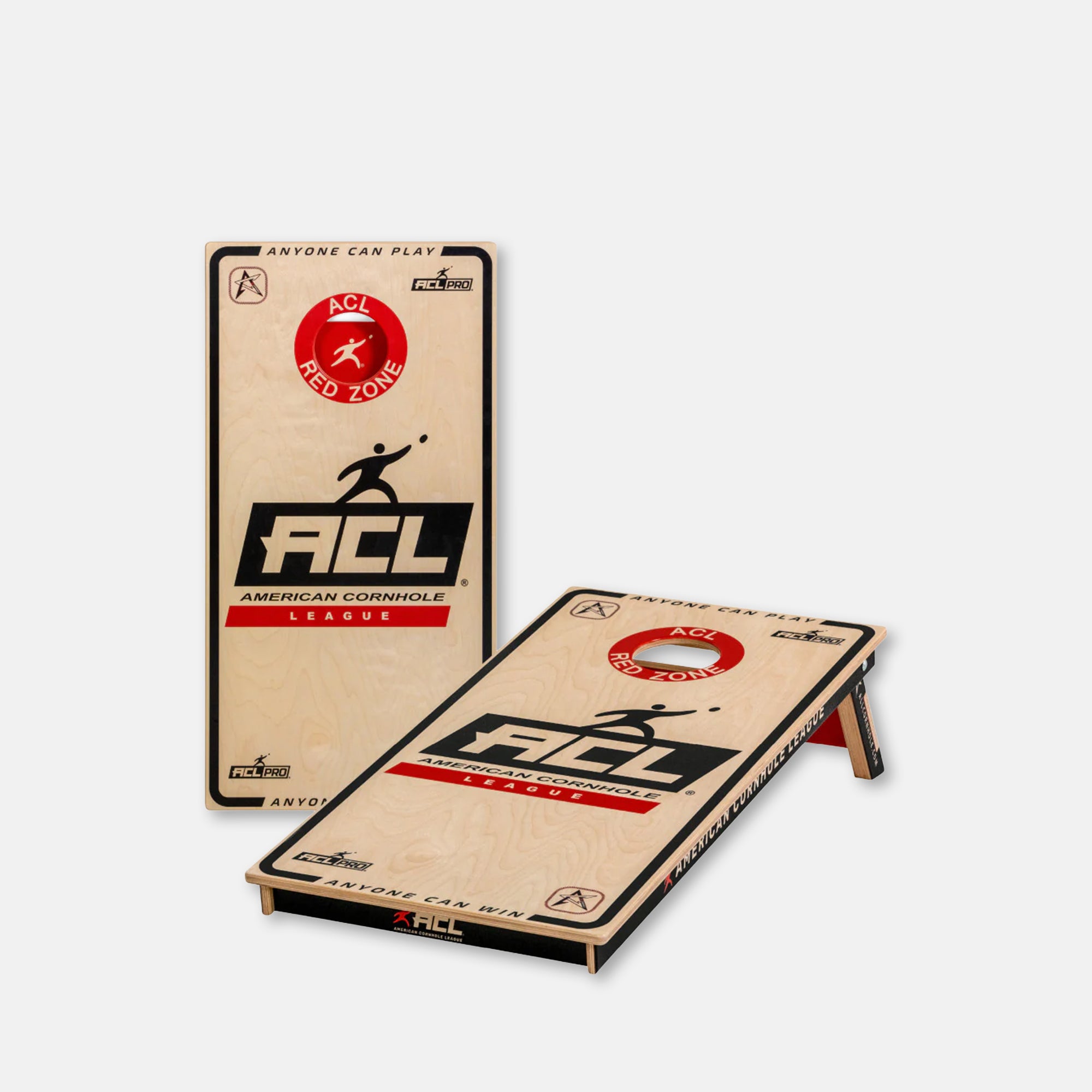
AllCornhole's ACL PRO boards feature a 2x4 playing surface, premium birch construction, an 18mm playing surface, and a 5-step ACL top-coat system.
If you're looking for competition-focused equipment and want to invest in a premium set, explore the PRO Cornhole Boards collection.
ACL ELITE Boards
ACL ELITE boards sit between PRO and COMP equipment and are designed for players who want high-quality construction for serious play.
They provide a full-size 2x4 playing surface and premium construction while offering a different balance of performance and price compared with PRO boards.
They're a strong choice for players involved in local leagues or competitive backyard play.
You can compare ACL ELITE alongside PRO and COMP options in the PRO Cornhole Boards collection.
ACL COMP Boards
ACL COMP boards are designed for competitive players who want quality construction without stepping all the way up to PRO-level equipment.
AllCornhole's ACL COMP boards feature a 2x4 playing surface and a 15mm playing top. The current COMP boards have a 46–50 lb set weight, birch construction, and a 4-step ACL top-coat finish.
They're a great option for players who are getting more serious about their game, participating in competitive events, or simply want a high-quality board for regular play.
Compare ACL COMP with the other competition-level options in the PRO Cornhole Boards collection.
ACL REC Boards
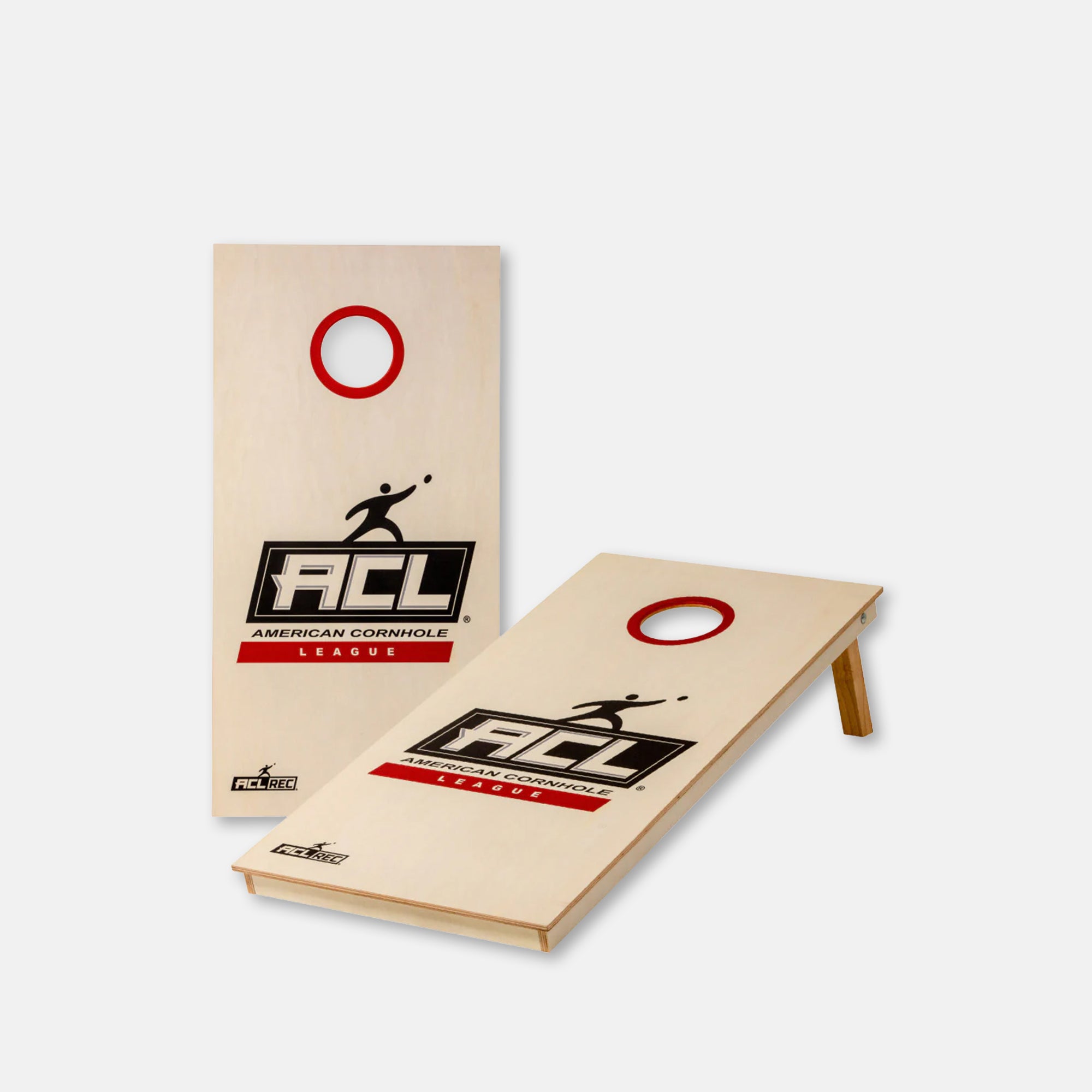
ACL REC boards are designed for recreational play.
They're a strong option for backyard players, families, parties, and anyone who wants a full-size 2x4 board without necessarily needing competition-level construction.
AllCornhole's current ACL REC boards are part of the Backyard Cornhole Boards collection, which also includes Mini, 2x3, and Baggo options.
Does Board Thickness Matter?
Yes. Board thickness can affect the feel, stability, and consistency of a cornhole board.
Competition-oriented boards commonly use thicker playing surfaces because they help provide a solid, consistent platform for bags.
For example, AllCornhole's current board lineup includes:
-
ACL PRO: 18mm top
-
ACL ELITE: 18mm top
-
ACL COMP: 15mm top
-
ACL REC: 12mm top
Thicker doesn't automatically mean "better" for every player. It generally means a more substantial construction, but your ideal board depends on how seriously you play and how much you're willing to invest.
What Materials Are Cornhole Boards Made From?
The material used to construct a cornhole board affects its durability, weight, playing characteristics, and price.
Birch and Wood Construction
Quality wood construction is common in competitive cornhole boards.
Premium plywood and birch construction can provide a stable, durable playing surface while creating the consistent feel competitive players expect.
Our current PRO lineup, for example, uses premium birch construction.
Composite and Other Materials
Some recreational boards use alternative materials designed around portability, weather resistance, or durability.
These can be useful for players who prioritize convenience over a traditional tournament-style board.
The right material ultimately depends on where and how you plan to use the boards.
Does the Playing Surface Matter?
Absolutely.
The playing surface affects how your bags move across the board.
A smooth, consistent surface helps create predictable bag movement, which becomes increasingly important as you improve your game.
Competitive players often pay close attention to how their bags interact with the surface because subtle differences can affect slides, blocks, pushes, and other shots.
Your board and bag combination matters, too. If you're upgrading your boards, consider pairing them with a quality set of Cornhole Bags that matches your preferred playing style.
What Should You Look for in the Frame and Legs?
The playing surface gets most of the attention, but the frame underneath is equally important.
A good frame should:
-
Keep the board stable during play.
-
Minimize movement and vibration.
-
Support the playing surface.
-
Hold up to repeated use.
-
Fold or collapse easily if portability is important.
Leg construction matters as well. Sturdy legs help keep the board at a consistent height and angle during play.
If you frequently transport your boards, look for a design that balances structural stability with portability.
How Heavy Should Cornhole Boards Be?
Board weight is another important consideration.
Heavier boards generally provide more stability, which can be beneficial during competitive play. However, they can also be more difficult to carry and store.
Lighter boards are easier to transport, making them attractive for backyard players, tailgaters, and anyone who frequently moves their equipment.
For example, AllCornhole's current full-size PRO boards weigh approximately 62 pounds per set, while COMP boards weigh approximately 46–50 pounds.
Backyard options can be considerably lighter. Current Mini boards weigh approximately 13 pounds per set, while 2x3 options weigh approximately 34 pounds.
The right weight comes down to what matters most to you:
Choose heavier boards if you prioritize:
-
Stability
-
Competitive play
-
A substantial construction
-
Frequent stationary use
Choose lighter boards if you prioritize:
-
Portability
-
Easy setup
-
Storage
-
Tailgating and travel
What Are the Best Cornhole Boards for Beginners?
For beginners, you don't necessarily need to jump straight into the most expensive equipment.
A full-size 2x4 ACL REC board can be a great starting point because it gives you the traditional playing surface while keeping the construction and price more accessible.
Starting with a full-size board can also help you develop consistent throwing mechanics if you eventually decide to move into competitive play.
If you're looking for a board that can grow with your game, an ACL COMP board is another option worth considering.
Browse the Backyard Cornhole Boards collection for recreational options or the PRO Cornhole Boards collection to compare COMP, ELITE, and PRO boards.
What Are the Best Cornhole Boards for Competitive Players?
Competitive players should generally prioritize:
-
Consistent playing surfaces
-
Stable construction
-
Regulation-size dimensions
-
Quality materials
-
Reliable frames and legs
-
Construction designed for repeated use
For players who regularly compete, the ACL PRO lineup is designed around those priorities.
If you're competing at a less advanced level or looking for a balance between performance and price, ACL COMP and ACL ELITE boards are worth considering.
You can compare the different options in the PRO Cornhole Boards collection.
What Are the Best Cornhole Boards for Backyard Play?
For most backyard players, an ACL REC 2x4 board is an excellent option.
It provides the familiar full-size playing surface while being designed for recreational use.
If portability is more important, consider a smaller board such as a 2x3 or Mini.
The best backyard board isn't necessarily the most expensive one. It's the one that fits your space, playing frequency, storage situation, and budget.
Explore the Backyard Cornhole Boards collection to compare ACL REC, Mini, 2x3, and Baggo options.
What Are the Best Cornhole Boards for Tailgating?
Tailgating calls for a different set of priorities.
You want boards that are:
-
Easy to transport
-
Easy to set up
-
Easy to store
-
Durable enough for outdoor use
-
Appropriate for the amount of space available
A 2x3 board can be a good compromise between a full-size board and a compact setup.
Mini boards and Baggo-style boards can also make sense when portability is the top priority.
For more options, explore the Backyard Cornhole Boards collection.
What About College Cornhole Boards?
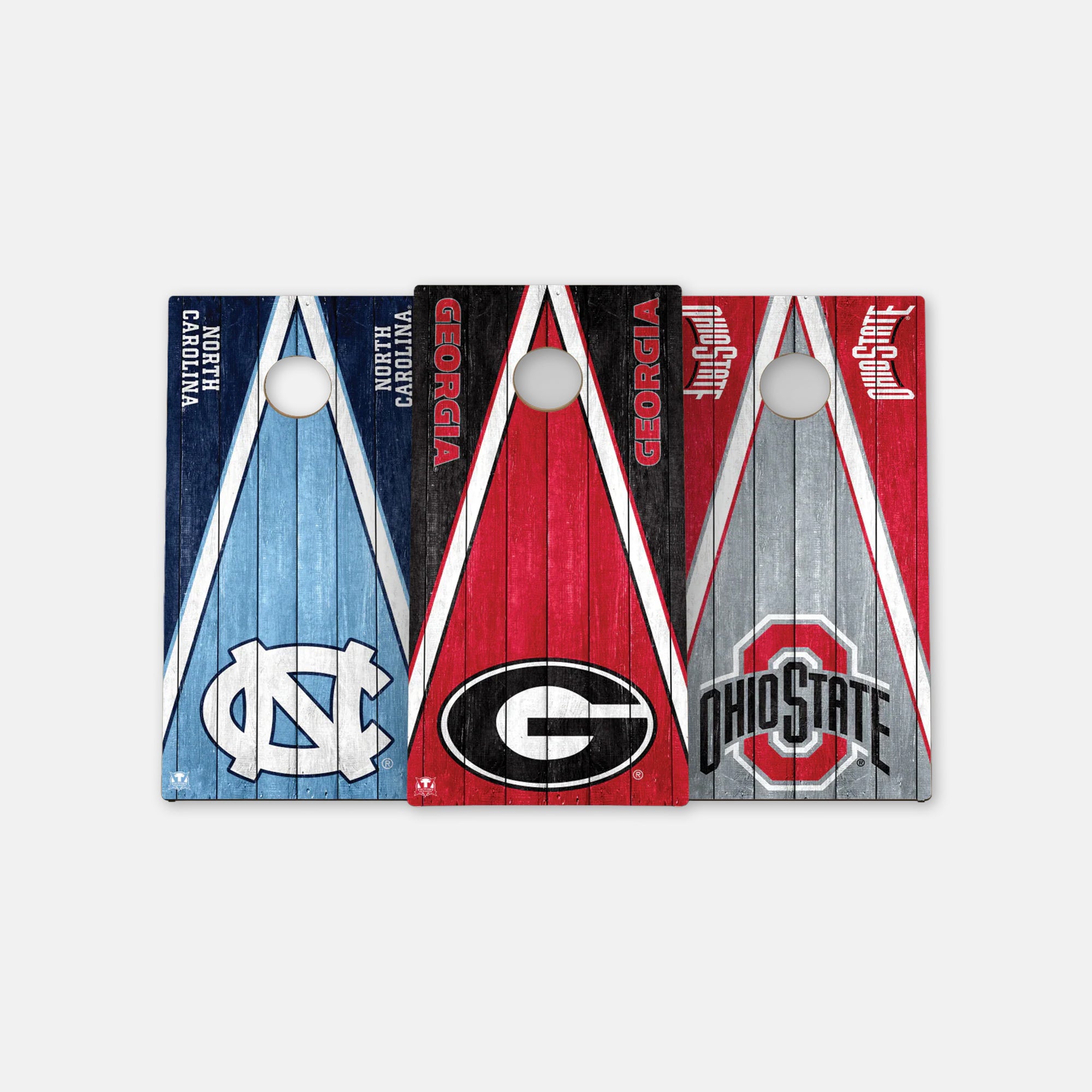
If you're buying boards because you want to represent your favorite school, AllCornhole offers officially licensed college designs across a variety of teams.
These can be a great option for:
-
Tailgates
-
Game-day parties
-
Backyard gatherings
-
Alumni events
-
College fans
Many licensed designs are available in full-size 2x4 formats, giving you the traditional playing experience while adding your team's colors and branding.
Can You Leave Cornhole Boards Outside?
Cornhole boards are designed for outdoor play, but that doesn't mean they should be left exposed to the elements indefinitely.
Moisture, rain, humidity, extreme temperatures, and prolonged sunlight can eventually affect the materials and finish.
To extend the life of your boards:
-
Store them somewhere dry when you're finished playing.
-
Avoid leaving them outside overnight.
-
Don't store them directly on wet ground.
-
Allow wet boards to dry completely before storing them.
-
Use a cover or storage solution when appropriate.
-
Avoid prolonged exposure to moisture.
Proper care can help maintain the playing surface and construction over time.
How Much Should You Spend on Cornhole Boards?
Cornhole boards can range from relatively affordable recreational options to premium competition-level equipment.
Instead of choosing based solely on price, consider how frequently you'll use them.
Occasional Backyard Player
If you only play a few times each year, a recreational board may be all you need.
Regular Backyard Player
If you're playing every weekend, investing in a more durable full-size board can make sense.
Competitive Player
If you're playing leagues or tournaments, the consistency and construction of competition-focused boards become more important.
Professional or Serious Tournament Player
If you're competing at the highest levels, premium PRO-level equipment may be worth the investment.
In other words, buy for your level of play—not someone else's.
Should You Buy Boards or a Complete Cornhole Set?
If you already own a quality set of bags, buying boards separately can make sense.
If you're starting from scratch, a complete set can be more convenient because you get everything you need to start playing.
When comparing complete sets, check what bags are included and whether the boards match the type of play you're planning to do.
If you need bags separately, you can browse AllCornhole's complete Cornhole Bags collection to find options ranging from recreational to competitive play.
How to Choose the Right Cornhole Board: A Quick Guide
Still not sure which board is right for you?
Start with these five questions:
1. How seriously do you play?
Casual: ACL REC or smaller backyard boards
Competitive: ACL COMP or ELITE
Advanced/Tournament: ACL PRO
2. Do you want a full-size board?
Yes: Choose a 2x4
No: Consider a 2x3, Mini, or Baggo
3. How important is portability?
Very important: Consider smaller or lighter boards
Not important: A heavier 2x4 board may be ideal
4. How often will you use them?
Occasionally: Recreational construction may be enough
Frequently: Consider COMP, ELITE, or PRO construction
5. What's your budget?
Set a realistic budget based on how frequently you'll play and how long you expect to keep the boards.
Which Cornhole Board Is Right for You?
| Player Type | Recommended Board |
|---|---|
| Beginner | ACL REC 2x4 |
| Backyard Player | ACL REC 2x4 |
| Serious Backyard Player | ACL COMP 2x4 |
| Competitive Player | ACL COMP or ELITE |
| Advanced/Tournament Player | ACL PRO |
| Tailgater | 2x3 or portable 2x4 |
| Family/Kids | Mini 1x2 |
| Limited Space | 2x3 or Mini |
| College Fan | Licensed College 2x4 |
| Maximum Portability | Mini or Baggo |
Final Thoughts: Choosing the Right Cornhole Boards
The best cornhole board isn't necessarily the biggest, heaviest, or most expensive option.
It's the board that matches your playing style, experience level, available space, portability needs, and budget.
For most players, a full-size 2x4 board is the best place to start. From there, the biggest differences come down to construction quality, board thickness, playing surface, weight, and intended level of play.
If you're just getting started, an ACL REC board can provide a great recreational setup. If you're becoming more competitive, ACL COMP and ELITE boards offer a step up in construction. And if you're serious about tournament-level play, ACL PRO boards are built for the highest level of competition.
Ready to find your board?
Explore the complete Cornhole Boards collection to compare sizes, construction levels, designs, and playing options.
Read more
A Complete Guide to Speed Ratings, Materials & Play Style Choosing the right cornhole bags can make a bigger difference in your game than you might think. Whether you're playing casually in the...
Whether you're playing in the backyard, at a tailgate, or competing in a tournament, understanding the rules of cornhole makes the game more fun and helps keep everyone on the same page. The basic ...